
 English | EN
Energy consumption has become one of the most pressing challenges of our time, driven by growing industrial activity, expanding digital infrastructure, and increasing environmental concerns. Traditional approaches to managing energy often rely on fixed rules and manual oversight, which are not flexible enough to handle dynamic, real-world conditions. As a result, inefficiencies go unnoticed and energy is frequently wasted. Artificial Intelligence (AI) offers a new approach by enabling systems to learn from data, adapt to changing patterns, and make smarter decisions in real time.
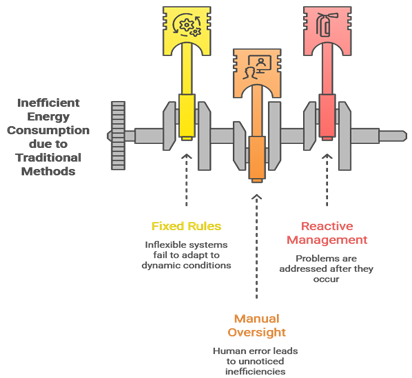
At its core, AI brings a shift from reactive to proactive energy management. Instead of simply responding to problems after they occur, AI systems can predict demand, detect inefficiencies, and optimize operations continuously. For example, in buildings and industrial environments, AI can analyze historical and real-time data to adjust heating, cooling, lighting, and machine usage based on actual needs rather than assumptions. This leads to more precise energy usage, reducing waste while maintaining performance and comfort.
One of the most impactful areas where AI is making a difference is in large-scale systems such as energy grids and data centers. Energy demand fluctuates throughout the day, and balancing supply with demand is a complex challenge. AI helps by forecasting usage patterns and optimizing distribution, making it easier to integrate renewable energy sources and reduce unnecessary production. Similarly, in data centers, AI can optimize cooling systems and workload distribution, significantly lowering the energy required to run digital services that power modern life.
Another important contribution of AI is predictive maintenance. Machines and systems that are not functioning efficiently often consume more energy than necessary. By analyzing sensor data and detecting early signs of wear or failure, AI can recommend timely maintenance, preventing energy loss and reducing operational downtime. This not only improves efficiency but also extends the lifespan of equipment, creating both economic and environmental benefits.
However, it is important to recognize that AI itself requires energy, especially when training large models or running them at scale. The real value of AI lies in using it responsibly designing systems that ultimately save more energy than they consume. When applied thoughtfully, AI moves beyond hype and becomes a practical tool for sustainability. It empowers organizations to make better decisions, optimize resource usage, and take meaningful steps toward reducing their environmental impact.