 English | EN
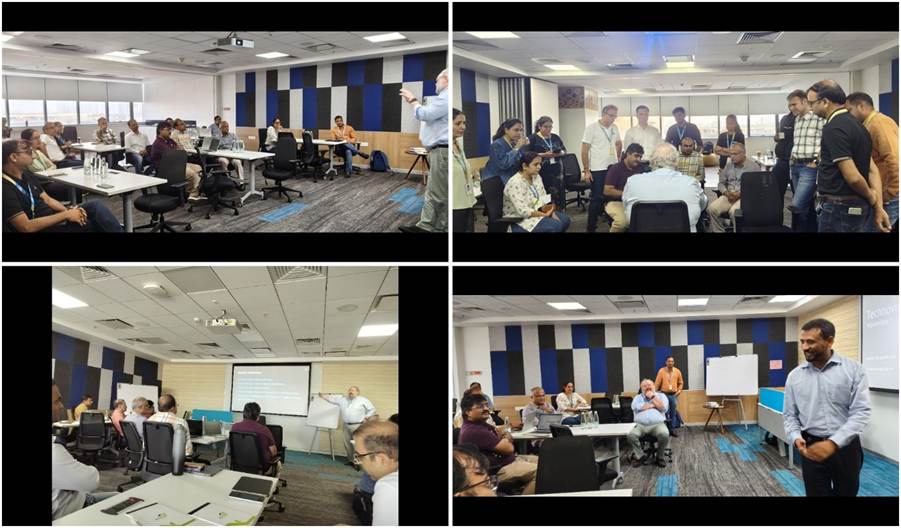
I recently had the privilege of attending the Technovision 2026 Masterclass in Mumbai — a full‑day, in‑person workshop with senior architects across Capgemini. Led by Michiel Boreel, Sogeti CTO, the session was far more than a walkthrough of trends; it was a lesson in how to think about technology in a world where everything is accelerating.
I was also the only architect representing performance engineering and testing, which made the conversations even richer because end user experience is where business value ultimately lands. I walked in expecting technology updates; I walked out with a new lens to interpret relevance, signal, and strategic clarity.
Technovision structures the future into 9 containers and 37 interconnected trends — not as predictions, but as a cohesive ecosystem. For anyone curious, the full report is available here:🔗 https://www.capgemini.com/insights/research-library/technovision-2026/
One line from the session has stayed with me: “Noise for one company can be signal for another.”
At a time when global AI and data investments exceed $600B, it becomes easy to get swept up by excitement and headlines. But as architects, our role is not to chase hype — it is to interpret relevance, understand the client’s business reality, and identify the problem behind the problem. Technology alone doesn’t transform; clarity does.
A highlight of the day was the Technovision Tarot exercise — a creative and structured way to solve real industry challenges using trend cards. It reinforced that uncertainty is normal, but structure helps navigate it; strategic dialogue outweighs reactive decisions; and trends are lenses, not checklists. It also reminded us that storytelling is a leadership skill.
Another powerful insight: the future workplace isn’t human vs. AI — it’s human + AI + autonomous agents, working in a connected ecosystem. Decision‑making becomes collaborative, interfaces evolve into intelligent partners, and productivity gains emerge only when trust and governance are intentionally engineered.
This shift demands new thinking — moving from control to active listening, from deduction to exploration, from isolated systems to orchestrated ecosystems. The discussions were grounded, honest, and balanced between optimism and healthy skepticism. We were encouraged to be bold yet grounded, creative yet responsible, visionary yet business‑aligned.
Even though the room spanned multiple tech domains, one thing became clear: Technovision applies just as strongly to performance engineering. It pushes us to think about ecosystem resilience, AI cost as the new performance KPI, confidence thresholds for probabilistic systems, and observability as a strategic asset rather than an operational one.
My takeaway:
The future won’t be shaped by those who simply react to trends — but by those who interpret them wisely.
Grateful to the Global and India Leadership Team, facilitators, the Global Architecture Community, and the brilliant minds in the room for the opportunity to learn, debate, and rethink how we design the future.
If you’re looking to understand where technology is truly heading — and how to think clearly in a world that’s moving faster every day — Technovision 2026 is worth exploring.