
 English | EN
I am writing a series on Emerging Trends in Data Governance. I will be breaking down multiple aspects of these trends and diving into deeper detail on each of the major subject areas I’ve covered in my first article in this space. The intent as always is to provide you with insight and practices you might be able to adopt in your organization. I hope you find this series insightful and thought-provoking.
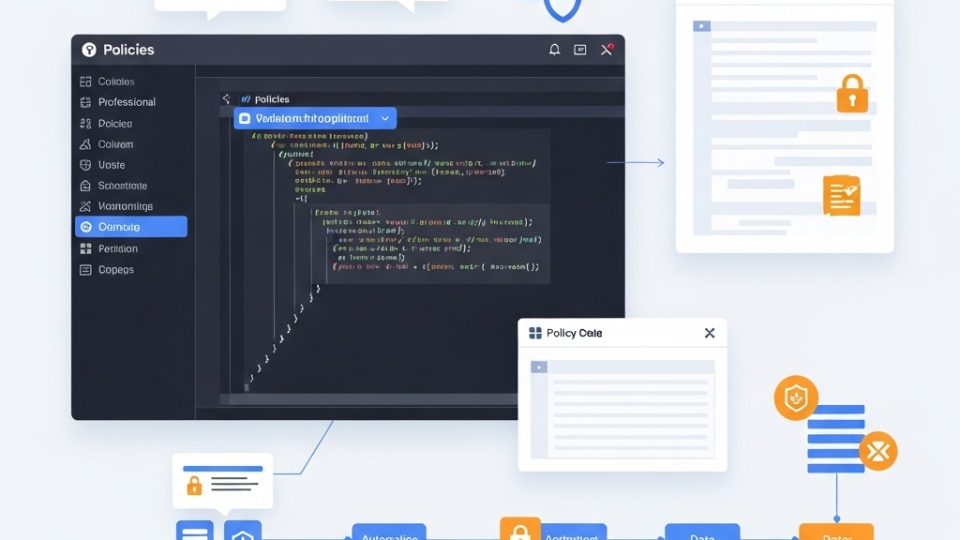
“Policy as Code” (PaC) is the practice of defining, managing, and enforcing policies and rules as machine-readable, executable code. Much like “Infrastructure as Code” (IaC) revolutionized infrastructure provisioning, PaC extends this philosophy to governance. Instead of static documents and manual checklists, policies are written in high-level programming languages (e.g., YAML, Rego, Python) and stored in version control systems.
Why Policy as Code for Data Governance?
The benefits of applying PaC to data governance are profound:
- Automation and Efficiency: PaC eliminates the need for manual policy checks, enabling automated enforcement across vast data landscapes. This accelerates data workflows, reduces operational costs, and frees up human resources for more strategic initiatives.
- Consistency and Scalability: Policies are applied uniformly across all platforms, systems, and data pipelines, regardless of scale. This ensures consistent adherence to governance standards, even as data volumes and complexity grow.
- Version Control and Auditability: By treating policies like software code, they can be versioned, allowing for clear change tracking, peer review, and easy rollback to previous states if issues arise. This inherently builds a comprehensive audit trail, crucial for compliance.
- “Shift-Left” Governance: PaC enables organizations to embed governance checks early in the data lifecycle, often within Continuous Integration/Continuous Delivery (CI/CD) pipelines for data products or infrastructure deployments. This proactive “shift-left” approach identifies and remediates policy violations before they can impact production, reducing the cost and effort of remediation.
- Reduced Human Error: Automating policy enforcement significantly minimizes the risk of misconfigurations, accidental policy infringements, and inconsistent interpretations that often plague manual processes.
- Enhanced Visibility and Collaboration: Policies defined as code are explicit, transparent, and accessible to all stakeholders. This fosters better understanding, facilitates collaboration between data engineers, data scientists, security teams, and legal departments, and builds collective ownership of governance.
Implementing Policy as Code for Data Governance
Adopting PaC requires a strategic shift:
- Define Clear, Granular Policies: The first step is to translate abstract organizational policies (e.g., “PII must be encrypted at rest”) into precise, actionable rules that can be expressed in code.
- Choose the Right Tools and Policy Engines: Organizations need to select appropriate policy engines (e.g., Open Policy Agent (OPA) for general-purpose policy enforcement, Cloud Custodian for cloud resource governance, or specific vendor tools) that integrate with their existing data stack and development workflows.
- Integrate with Data Workflows: Embed policy checks at critical points across the data lifecycle – during data ingestion, transformation, storage, and access requests. This means integrating PaC into data pipelines, CI/CD for data products, and access management systems.
- Implement Robust Testing and Monitoring: Like any code, policies must be rigorously tested (unit tests, integration tests) to ensure they function as intended. Continuous monitoring is essential to detect real-time policy violations and track compliance status.
- Foster a Collaborative Culture: Successful PaC adoption relies on close collaboration between data engineering, DevOps, security, and governance teams, ensuring that policies are technically sound, effectively enforced, and aligned with business objectives.
Policy as Code in Modern Data Architectures
PaC is not just a trend; it’s a critical enabler for modern data architectures:
- Data Mesh: In a decentralized data mesh, PaC is vital for ensuring “federated computational governance.” While individual domain teams own their data products, PaC allows for the consistent application of organizational-wide policies (e.g., data quality standards, access controls, privacy regulations) across all domains, without stifling their autonomy.
- Data Fabric: A data fabric aims to provide a unified, intelligent layer over diverse data sources. PaC enhances this by programmatically enforcing data policies during automated data integration, transformation, and consumption, ensuring consistency, security, and compliance across the fabric.
In both paradigms, Policy as Code acts as the underlying enforcement mechanism, translating abstract governance principles into concrete, executable rules that scale with the complexity of the data ecosystem.
Challenges and Considerations
While Policy-as-Code offers many benefits, its adoption comes with certain challenges:
- Policy Complexity: Complex policies may be difficult to encode in rule-based systems.
- Skills Gap: Data teams need to develop coding proficiency alongside governance expertise.
- Tool Integration: Seamless integration with existing data catalogs, lineage tools, and platforms requires thoughtful architecture.
- Testing & Validation: Policies must be tested carefully to prevent disruption to data pipelines or access.
The Road Ahead
As organizations increasingly adopt multi-cloud, hybrid, and decentralized data architectures, automated, code-driven governance is rapidly becoming essential. Policy-as-Code bridges the gap between governance intent and operational execution by bringing together governance, compliance, security, and automation.
The most forward-thinking enterprises are combining metadata management, data lineage, and Policy-as-Code to build autonomous data governance ecosystems. These systems dynamically adjust access, enforce compliance, and even optimize data costs—all through policy-driven automation.
By embracing Policy-as-Code, organizations not only strengthen governance but also unlock new levels of agility, scalability, and resilience in their data operations.
The evolution of data landscapes demands an equally transformative approach to data governance. Emerging trends like automation, AI/ML integration, decentralization, and a strong focus on data ethics are pushing organizations toward more agile and intelligent governance models. Policy as Code stands at the forefront of this evolution, offering the means to automate policy enforcement, reduce errors, ensure consistency, and embed governance proactively throughout the data lifecycle. By embracing PaC, organizations can build a more robust, scalable, and trustworthy data environment, unlocking the full potential of their data while upholding the highest standards of responsibility.