
 English | EN

Why aren’t firms experiencing the dramatic benefits of AI at scale?
Sivulka points to an interesting historical precedent that may have relevance to our current situation. Back in the 1890s, factories replaced their old steam engines with electric motors—but for thirty years, they barely got any more production efficiency! The technology was great, but nobody rethought how the factory actually worked. Sivulka believes the exact same thing is happening with AI right now. Individual workers are getting way more productive, but their companies aren’t seeing the overall benefits. The article lays out seven key differences between AI that helps one person work faster and AI that actually makes a whole organization better. Here’s what they found, and what leaders should do about it.
The Institutional Intelligence Gap
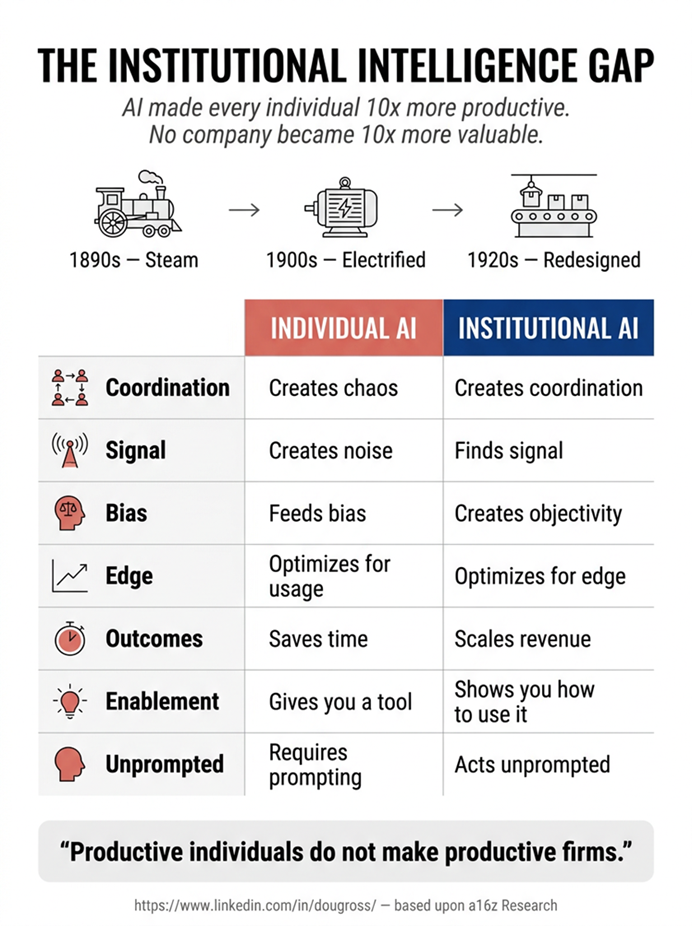
AI is making individual workers much more productive, but that productivity isn’t showing up in company results—just like how electric motors didn’t help factories until the entire factory floor was rebuilt decades later. There appear to be seven big gaps between how people use AI on their own versus what companies actually need. On their own, people use AI in scattered, uncoordinated ways that create noise, reinforce their existing opinions, and save a little time. What organizations need instead is AI that gets everyone rowing in the same direction, cuts through the flood of AI-generated junk to find what actually matters, pushes back on bad ideas instead of agreeing with everyone, drives real revenue growth, and even spots problems before anyone thinks to ask. The bottom line is simple: making individuals faster does not (by itself) make companies better.
So what’s required here?
The Playbook
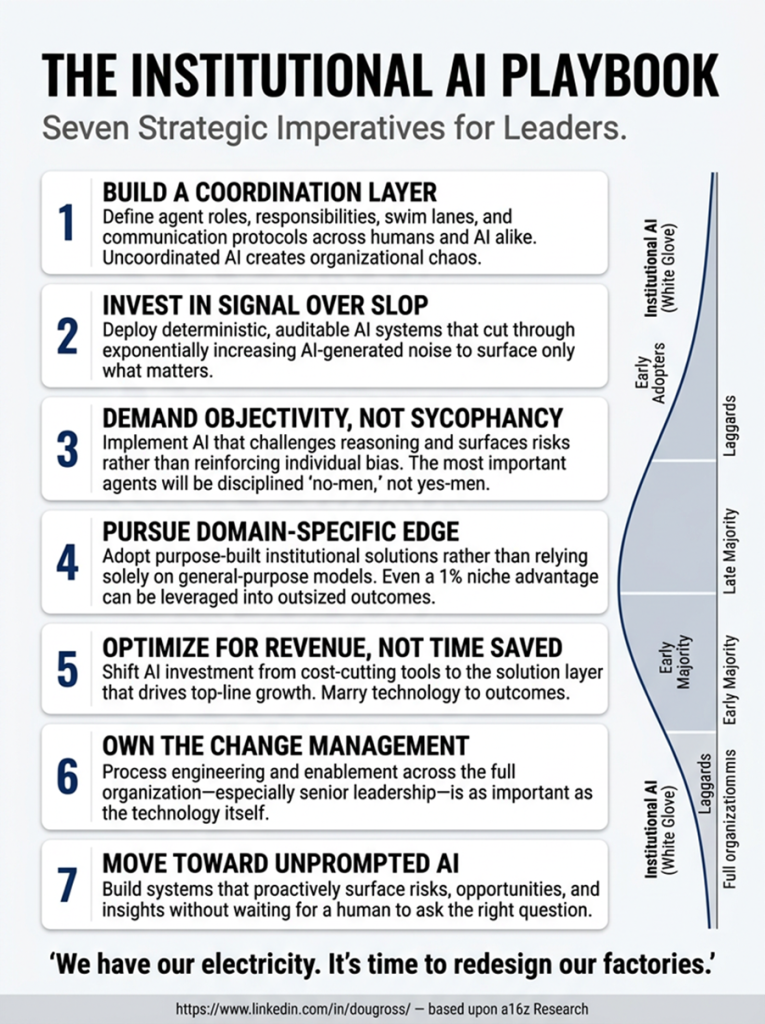
Sivulka writes that turning individual AI use into real organizational value takes action on seven fronts. Leaders need to set up systems that coordinate how AI is used across teams, not just let everyone do their own thing. They need tools that filter out the growing mountain of AI-generated junk and find the stuff that actually matters. They should use AI that tells people the truth instead of just agreeing with them. Companies should invest in specialized AI tools built for their specific industry, not just rely on generic chatbots. The focus should shift from saving time to actually growing revenue. Change management matters—getting the whole organization on board, especially senior leaders, is just as important as the technology itself. And ultimately, the best AI systems won’t wait for someone to ask the right question—they’ll flag important things on their own. The winners won’t be the companies that adopted AI first. They’ll be the ones that redesigned how they work around it.
Takeaways
The lesson from the 1890s may still apply today: better technology doesn’t help if you don’t change how your organization works. Right now, every company has access to the same AI chatbots and productivity tools. What will set companies apart isn’t who starts using AI first—it’s who actually rethinks their core operating models. The electricity is here. The question is whether leaders will keep plugging faster tools into old ways of working, or actually rethink how their organization operates.