
 English | EN
The emergence of Large Language Models (LLMs) and Generative AI (GenAI) has given rise to a new paradigm known as Agentic AI. Unlike traditional conversational systems that primarily generate text, AI agents are capable of reasoning, planning, interacting with external tools, and autonomously executing complex objectives. They can decompose high-level goals into manageable subtasks, retrieve and integrate knowledge from multiple sources, interact with APIs and software services, and continuously evaluate their progress before producing a final response. These capabilities have opened the door to a new generation of intelligent applications across diverse domains.
But what happens when a single AI agent is asked to act as an architect, analyst, auditor, financial adviser, and governance expert at the same time? Increasingly, the answer is simple: it struggles.
As Agentic AI applications have progressively moved from research prototypes toward real-world deployment, a new challenge has emerged. Real-world problems are rarely static, complete, or confined to a single domain of expertise. Instead, they involve uncertainty, changing requirements, heterogeneous data sources, and multiple stakeholders with different objectives. Expecting one agent to simultaneously possess deep expertise across all these dimensions can lead to overloaded contexts, conflicting instructions, weaker reasoning, and reduced reliability.
This raises a fundamental question: Can a single autonomous agent effectively solve increasingly complex problems, or should intelligence be distributed across multiple collaborating agents?
As enterprise AI adoption accelerates, organizations are discovering that intelligence may need to be distributed rather than centralized. This shift toward collaborative intelligence may represent the next major evolution of Agentic AI.
The limitations of mono-agent architecture
The first generation of Agentic AI has been largely built around mono-agent architectures, where a single autonomous agent is responsible for understanding the user’s request, planning the workflow, retrieving information, invoking external tools, reasoning about intermediate results, and generating the final answer. In the complex context, this architecture has raised some limitations.
One of the primary challenges is performance degradation [1]. As more responsibilities are assigned to the same agent, its reasoning process becomes overloaded. The agent must continuously switch between different cognitive roles and intents, while simultaneously managing long conversation histories, retrieved documents, API responses, and execution traces. This growing cognitive demand often results in context overload, inconsistent reasoning, and reduced response quality. Furthermore, mono-agent systems remain constrained by predefined skills and workflows [2]. Although developers can continuously enrich prompts or integrate additional tools, the agent’s capabilities remain largely limited to what has been explicitly designed. When dealing with unfamiliar scenarios or evolving business requirements, adaptation generally requires manual intervention rather than autonomous reorganization.
Multi-agent systems: From individual intelligence to collective intelligence
A Multi-Agent System (MAS) fundamentally changes the way intelligent systems are designed. Rather than relying on a single agent expected to master every aspect of a problem, MAS distributes intelligence across a team of specialized agents that collaborate to achieve a common objective. Each agent focuses on a specific responsibility such as planning, information retrieval, technical analysis, financial reasoning, or quality validation, allowing it to develop deeper expertise within its domain. More importantly, adaptive Multi-Agent Systems enable emergent intelligence, where new capabilities arise naturally from interactions between agents rather than being explicitly programmed. Through communication, negotiation, mutual validation, and dynamic task allocation, agents collectively discover solutions that no single agent could generate independently.
Real-world application: adaptive multi-agent AI for cloud resource recommendation
Cloud resource recommendation represents a relevant use case illustrating the growing importance of Adaptive Multi-Agent Systems. This research direction is being explored as part of the AI4FinOps project at SogetiLabs, which investigates the potential of adaptive, collaborative agents to support the optimal choice of Cloud resources. Consider a developer asking, “I need cloud resources to deploy a web application that satisfies the following technical requirements.” A second user may ask a similar question while adding financial constraints, such as “I need the same architecture, but it must remain within a predefined budget.” Although both requests concern cloud resource selection, they require different expertise and different reasoning strategies.
A traditional mono-agent attempts to solve both problems using a single reasoning process. It must simultaneously understand the user’s technical requirements, estimate infrastructure costs, compare cloud services, verify architectural best practices, and generate explanations suitable for the user’s level of expertise. As additional constraints are introduced such as compliance requirements, sustainability objectives, performance optimization, or governance policies, the reasoning process becomes increasingly complex.
An adaptive Multi-Agent System approaches the same problem differently. The proposal of AI4FinOps project of multi-agent architecture consists of three main types of agents: Planning Agent, Expert Agent and Critic Agent (illustrated in Figure 1).
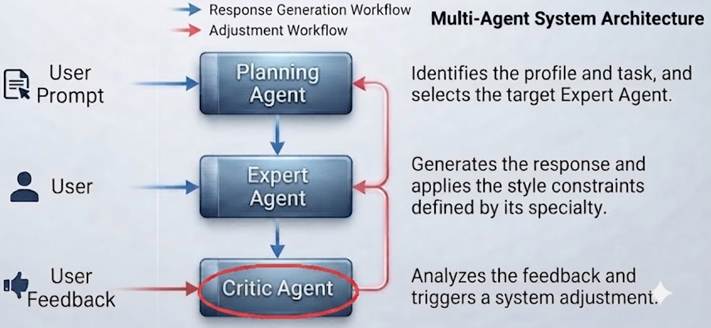
Figure 1: Multi-Agent architecture for Cloud resource recommendations
- The Planning Agent serves as the entry point of the system. It analyzes the user’s request, identifies the user’s expertise level and intent, decomposes the task into specialized subtasks, and routes each task to the most appropriate expert agent. If no existing expert satisfies the required confidence threshold, the planning layer can trigger the creation or integration of a new expert agent, allowing the system to evolve over time.
- Each Expert Agent is responsible for a specific domain. For example, an Azure Architecture Agent recommends appropriate cloud services and reference architectures, a FinOps Agent evaluates pricing models and optimization opportunities, a DevOps Agent generates deployment pipelines and Infrastructure-as-Code templates, while a Governance Agent verifies compliance with organizational policies. Because each agent concentrates on a single area of expertise, reasoning becomes more accurate and easier to maintain.
- The Critic Agent closes the adaptation loop by continuously evaluating user feedback. Feedback may be explicit, such as ratings or comments, or implicit, such as repeated reformulations, clarification requests, or conversation abandonment. Based on these signals, the Critic Agent determines whether the response quality degradation originated from an expert agent or from the planning process itself. It can then recommend parameter adjustments, reroute future requests to another expert, or trigger the creation of new expertise within the system.
This continuous adaptation fundamentally distinguishes adaptive Multi-Agent Systems from traditional mono-agent architectures. Rather than relying on one increasingly overloaded agent, intelligence becomes distributed, collaborative, and capable of evolving as new requirements emerge. Such architectures are particularly well suited for real-world applications where technical complexity, business constraints, and user expectations constantly evolve.
Perspective
The ongoing AI4FinOps experiment highlights that the future of enterprise AI may lie not in a single powerful agent, but in collaborative teams of specialized agents capable of self-organization and self-adaptation. As Agentic AI moves toward real-world applications, the key challenge is no longer simply building capable agents, but designing and coordinating Multi-Agent Systems in which specialized agents can effectively cooperate to achieve a shared objective.
References
[1] Huang, Lei, et al. “A survey on hallucination in large language models: Principles, taxonomy, challenges, and open questions.” ACM transactions on information systems 43.2 (2025): 1-55. [2] Lu, Siyuan, et al. “Morphagent: Empowering agents through self-evolving profiles and decentralized collaboration.” arXiv preprint arX