
 English | EN
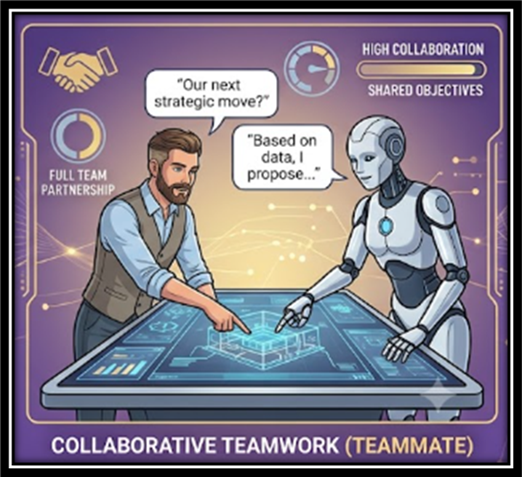
At 6:17 a.m., before the engineering stand-up begins, three agents have already been at work. One has inspected yesterday’s pull request and found a regression hiding in the test suite. Another has opened two competing implementation paths for a customer-facing workflow. A third has reviewed the dependency graph, flagged a security exposure, and paused with one question for a human: which tradeoff matters more, speed or resilience?
That is the real inflection point. The next wave of software engineering will not be defined by “AI that writes code.” That phase is already here. The real shift is toward greater autonomy: agents that can understand intent, plan work, use tools, inspect systems, run tests, recover from errors, coordinate with other agents, and improve over time.
This is the emerging discipline of agentic engineering: not prompt engineering, not just coding assistance, but the design of productive relationships between humans, models, tools, memory, workflows, governance, and organizations.
The important distinction is autonomy with accountability. A useful agent should not merely answer questions. It should take action. It should inspect the repo, form a hypothesis, edit files, run tests, read errors, revise, document what changed, and ask for help only when the next decision genuinely requires human judgment. That is the productivity unlock.
Cowork and similar desktop/workspace agents are pushing toward a more natural “AI teammate” experience: agents that live alongside your tools, manage tasks, and reduce the friction of starting work. OpenClaw represents another trend: open agent infrastructure, where users can assemble their own workflows, gateways, skills, and specialized agents rather than depend entirely on closed platforms. Hermes Agent adds a particularly important ingredient: persistent memory and skills. An agent that remembers your preferences, environment, recurring workflows, and past corrections can compound. It becomes less like a stateless chatbot and more like an operating layer for your work.
The broader trend is clear: autonomy is moving down the stack. Agents are no longer confined to chat windows. They are gaining terminals, browsers, file systems, APIs, cron jobs, messaging gateways, MCP servers, sandboxed execution, code review loops, and multi-agent delegation. The interface is becoming conversational, but the work is becoming operational.
This changes how innovation happens.
In the old model, innovation was bottlenecked by implementation bandwidth. A person or team had more ideas than time. Prototypes waited behind setup, boilerplate, research, debugging, integration, documentation, and deployment. In the agentic model, the cost of trying ideas falls dramatically. You can spin up three approaches, ask different agents to explore alternatives, compare results, and discard weak paths quickly. The advantage shifts from “who can type fastest?” to “who can frame the right problem, define the right constraints, and evaluate the result honestly?”
That means the most valuable people will not be those who blindly delegate everything to agents. They will be people who develop sharp taste, strong judgment, and clear operating principles.
To thrive in this environment, engineers and creators need a new operating system: specify, verify, contextualize, orchestrate, and govern.
Specify. Learn to define outcomes, not merely tasks. “Build a login page” is weaker than “Create a secure, accessible login flow with email/password, password-reset, rate limiting, tests, and a short implementation note.” Agents perform better when success is explicit, constraints are visible, and tradeoffs are named.
Verify. Create feedback loops. Autonomy without verification is just speed toward uncertainty. Tests, linters, benchmarks, evals, human review, observability, and rollback plans become more important, not less. The new standard is evidence, not demos.
Contextualize. Build reusable context. The best results will come less from clever prompts and more from well-managed context: architecture notes, runbooks, decision logs, domain vocabulary, tool instructions, prior corrections, and memory systems that make the agent smarter every time it works. Context engineering is becoming the real craft.
Orchestrate. Use agents as collaborators with distinct roles. One agent can implement, another can review, another can test, another can search documentation, and another can threat-model. Multi-agent work is not magic, but when scoped well, it creates parallel cognition and reduces the cost of exploring alternatives.
Govern. Protect human judgment. More autonomy raises the cost of vague goals, hidden assumptions, bad incentives, and poor taste. Agents can accelerate both good and bad ideas. The human role becomes setting direction, values, boundaries, decision rights, and standards.
Context is the new source code. As agents operate across longer horizons, the question shifts from “what prompt should I write?” to “what context should this system carry forward?” The most capable teams will treat context as an engineered asset: curated, versioned, refreshed, compacted, and connected to the right tools at the right moment. A thin prompt on top of poor context will not produce durable autonomy.
Simplicity still wins. The smartest agent systems will not always be the most elaborate. Many successful implementations will start with simple, composable workflows: clear inputs, bounded tools, transparent intermediate steps, and explicit checkpoints. Complexity should be earned. If a workflow can solve the problem predictably, use the workflow. If the problem is open-ended and the path cannot be known in advance, then use an agent.
Governance is the scaling mechanism. Once agents can act across codebases, data stores, ticketing systems, cloud environments, and customer workflows, governance is no longer a compliance afterthought. It becomes the control plane for trust: identity, permissions, audit trails, observability, policy enforcement, lifecycle ownership, escalation paths, and cost management. The organizations that scale agentic engineering safely will be the ones that make governance enabling rather than obstructive.
The operating model matters more than the tool list. Cowork, OpenClaw, Hermes Agent, Claude Code, Codex, OpenCode, Cursor-style IDE agents, and orchestration frameworks are signals of the same transition. But the winning question is not “which tool is newest?” It is “what system of work turns agent capability into repeatable outcomes?” That system includes reusable skills, shared runbooks, secure access patterns, evaluation gates, human-owned approvals, and telemetry that proves whether the agent is creating value.
The future of agentic engineering is not humans versus agents. It is humans with increasingly capable operational extensions. The winners will be those who stop treating AI as a novelty and start designing systems where intelligence, tools, memory, context, governance, and verification work together. The question is no longer whether agents can write code. The question is whether your organization is disciplined enough to let them work.
Greater autonomy is not about removing people from the loop. It is about moving people to the highest-leverage part of the loop: choosing what matters, defining what good looks like, and building environments where great ideas can move from imagination to reality faster than ever before.